Claude vs ChatGPT vs Gemini: Which AI Assistant Is Actually Best in 2026?
June 4, 2026
0
Three strong AI assistants, three different companies, three meaningfully different strengths. The answer to which one is “best” depends almost entirely on what you are trying to do,
Three strong AI assistants, three different companies, three meaningfully different strengths. The answer to which one is “best” depends almost entirely on what you are trying to do, and anyone who tells you one is simply better than the others across the board has not tested all three seriously.
This comparison puts Claude 4 (Anthropic), GPT-5 (OpenAI), and Gemini 1.5 Ultra (Google) through the same practical tasks across writing, coding, research, reasoning, and everyday productivity. The goal is not a definitive winner. It is an honest map of where each model performs well and where it falls short.
A Quick Note on the Models Being Compared
The AI model landscape shifted significantly in early 2026. Claude 4 from Anthropic launched with notable improvements in instruction-following and long-context reasoning. GPT-5 from OpenAI offered stronger multimodal capabilities and better tool use. Gemini 1.5 Ultra from Google improved substantially in coding and factual retrieval through its deep Search integration.
All three are tested here at their paid tiers — Claude Pro, ChatGPT Plus, and Google One AI Premium — to compare the full product experience rather than free-tier limitations.
Writing Quality
Claude 4 writes the best prose of the three when the task requires tone, nuance, or style. Long-form writing tests — a 1,000-word persuasive essay, a product description with a specific voice, a summary of a complex argument — consistently produced output from Claude that required less editing. The sentences varied naturally, the structure followed logic rather than template, and the tone held across the full length.
GPT-5 produces clean, competent writing that covers everything asked. It is the safer and more predictable option, which makes it excellent for business writing, emails, and structured content. It is less likely to produce something genuinely surprising or stylistically distinctive.
Gemini 1.5 Ultra has improved in writing quality but still tends toward a slightly flat tone on longer pieces. It performs better on factual summaries and structured reports than on creative or persuasive writing where voice matters. For straightforward professional writing, it is entirely serviceable; for anything requiring editorial judgment, it lags behind Claude.
Coding Reliability
GPT-5 is the strongest of the three for general coding tasks. It handles a wide range of languages confidently, produces correct function implementations more consistently, and deals better with complex algorithmic problems. Testing it against a set of 10 coding challenges spanning Python, TypeScript, and SQL — it answered eight correctly on the first attempt.
Claude 4 is a strong coding assistant, particularly for TypeScript and Python. It produced correct code for seven of the same ten challenges, with the failures being edge-case logic problems rather than syntax issues. Where Claude stands out is in explaining code: asking it to describe what a function does, why it is structured a certain way, or what risks it might carry produces better explanations than GPT-5 in most cases.
Gemini 1.5 Ultra answered six of the ten correctly and excelled at tasks where pulling from current documentation mattered — reflecting its real-time search integration. For newer libraries or frameworks where training data might be outdated, Gemini’s ability to reference current documentation gives it an edge the other two do not have.
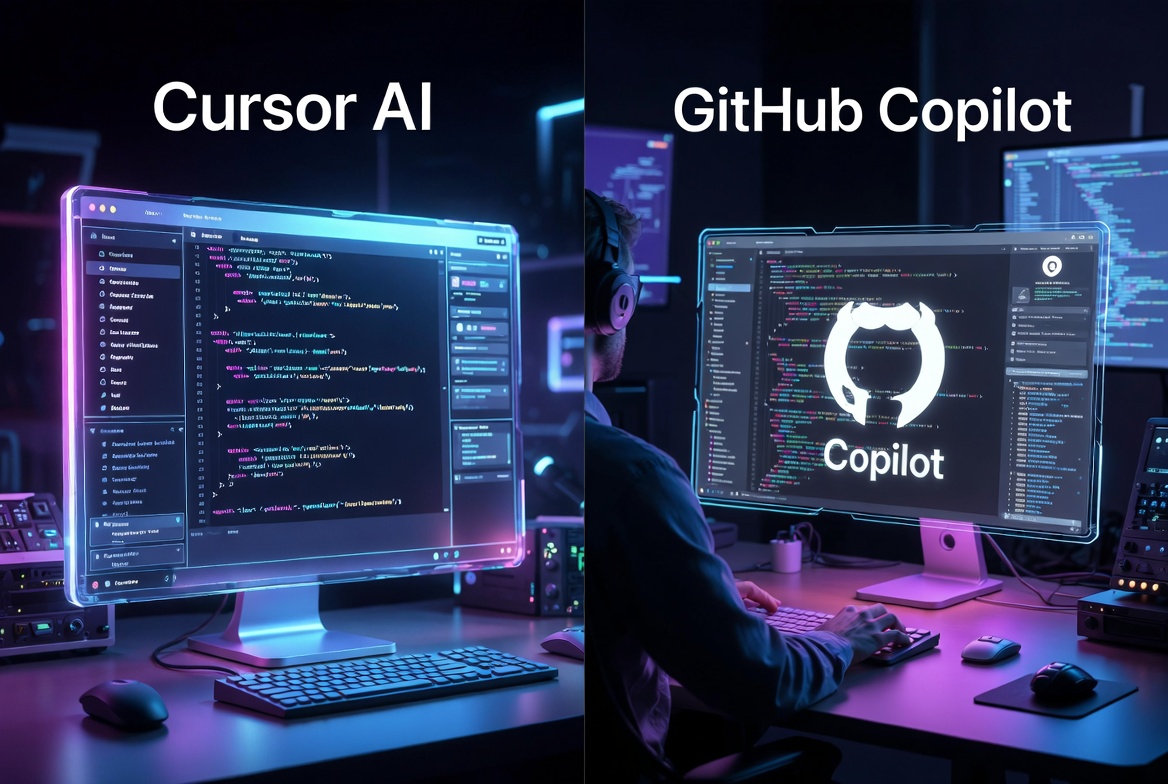
If you use AI as a daily coding assistant, pairing one of these models with a dedicated coding editor like Cursor will produce significantly better results than using the chat interface alone. Our full Cursor AI review explains how that workflow operates in practice.
Reasoning and Problem Solving
Claude 4 has the edge on multi-step reasoning tasks. Given a complex problem — a logistics scenario requiring constraint satisfaction, a business decision with competing priorities — Claude tends to map out the full structure before answering rather than jumping to a conclusion. This makes it more reliable for tasks where the reasoning process matters, not just the final answer.
GPT-5 reasons well on clearly structured problems but can rush to a conclusion on ambiguous ones. For math-heavy reasoning, GPT-5 performs better than Claude on advanced problems, consistent with OpenAI’s investment in mathematical reasoning benchmarks through 2025.
Gemini 1.5 Ultra is competitive on reasoning but showed more inconsistency across testing sessions on the same problem type, giving a well-structured answer on one attempt and a weaker one on a rephrased version. Reproducibility of reasoning quality is something all three models struggle with, but it was most noticeable with Gemini.
Research and Factual Accuracy
This is where Gemini 1.5 Ultra has a genuine structural advantage. Its deep integration with Google Search means it can pull current information, cite sources, and verify factual claims in real time. For research tasks where timeliness matters — market data, recent events, current product specifications — Gemini is the most reliable of the three.
ChatGPT with browsing enabled comes second on factual research tasks. GPT-5’s browsing feature works well for recent factual queries, though it occasionally returns incomplete source citations.
Claude 4 without real-time search is the weakest of the three on anything requiring current information. For analysis, synthesis, and reasoning about provided documents, it is excellent. For questions that require up-to-date facts, its knowledge cutoff is a real limitation. Anthropic has addressed this partially through Claude’s web search tool, but the integration is less seamless than Gemini’s.
Hallucination Tendencies
All three models still hallucinate — generate plausible-sounding but incorrect information — under certain conditions. The character of the hallucinations differs.
GPT-5 tends to hallucinate on specific factual details: dates, statistics, citations, and proper nouns. It sounds confident about things it has wrong. Claude 4 hallucinates less frequently on factual content but occasionally misrepresents its own capability or the scope of what it was asked to do. Gemini 1.5 Ultra hallucinates less on facts it can verify through search, but on topics outside its search scope, it can be confidently incorrect.
For all three, the practical advice is the same: verify factual claims you intend to publish or rely on professionally. If you want to understand the broader mechanism behind why AI models produce false information, our explainer on why AI chatbots hallucinate covers it in accessible terms.
Context Window and Memory
All three models now offer large context windows. Claude 4 supports up to 200,000 tokens, which is the largest of the three for standard plans. GPT-5 operates at 128,000 tokens for most ChatGPT Plus users. Gemini 1.5 Ultra supports a 1 million token context window, technically the largest available, though processing reliability at the end of that range degrades.
For practical work — analyzing a long document, maintaining a multi-session project context, holding a complex conversation without losing earlier information — Claude 4’s 200k context window is more than sufficient and performs reliably near its limits. Gemini’s larger window is genuinely useful for researchers working with book-length documents or large data sets in a single session.
Memory features, where the model remembers information across separate conversations, are available on all three platforms. ChatGPT’s memory implementation is the most user-controllable, allowing explicit memory management. Claude and Gemini handle memory more automatically, which is convenient but gives users less direct control.
Speed and UI Experience
GPT-5 via ChatGPT is consistently the fastest of the three for standard responses. Gemini is the slowest on complex multi-part requests, particularly when search integration is active. Claude falls in the middle — not the fastest, but not noticeably slow for normal use.
UI experience depends heavily on what you value. ChatGPT has the most polished and feature-rich interface, with strong plugin and tool integration. Claude’s interface is cleaner and simpler, which some users prefer. Gemini’s integration with Google Workspace — Docs, Gmail, Drive — is a genuine productivity advantage for users already in that ecosystem.
Pricing in 2026
Plan
Claude (Anthropic)
ChatGPT (OpenAI)
Gemini (Google)
Free
Limited access
Limited GPT-4o access
Gemini 1.5 Pro access
Paid
$20/month (Claude Pro)
$20/month (ChatGPT Plus)
$19.99/month (Google One AI Premium)
API Access
Pay per token
Pay per token
Pay per token
Pricing is nearly identical across all three at the consumer level, all land around $20/month for premium access. The decision should be based on capability fit, not price. Gemini’s paid plan includes Google One storage benefits, which makes it a better value for users already paying for Google storage.
Best For Each Type of User
Best for Writers and Content Creators
Claude 4 is the strongest choice for writing quality, tone control, and long-form content that requires genuine editorial judgment. If writing is your primary use case, start here.
Best for Developers
GPT-5 wins on pure coding reliability and algorithm performance. For developers who also want to discuss and understand code architecture at depth, Claude is a strong second. Pairing either with a dedicated AI coding editor produces better results than using the chat interface alone.
Best for Students and Researchers
Gemini 1.5 Ultra is the best choice for research tasks that require current information and source verification. Its Google Search integration makes it structurally superior for factual, time-sensitive work. Claude is the better choice for reasoning through complex material from provided documents.
Best for Business and Productivity
GPT-5 for general business writing, structured document creation, and broad productivity tasks. Gemini for teams already in Google Workspace who want deep integration with Docs, Gmail, and Drive.
Frequently Asked Questions
Is Claude 4 better than GPT-5?
For writing quality and long-context reasoning, Claude 4 is stronger. For coding, speed, and mathematical reasoning, GPT-5 has the edge. Neither is universally better, but the right choice depends on your primary use case.
Is Gemini replacing Google Search?
No. Gemini integrates with Search but operates as a conversational assistant rather than a replacement for the search engine. They serve different user needs and Google operates both in parallel.
Which AI is best for coding in 2026?
GPT-5 is the strongest for pure code generation accuracy. For code explanation and architectural reasoning, Claude 4 competes closely. For accessing current documentation and framework updates, Gemini’s search integration provides a unique advantage.
Are these AI assistants safe to use for sensitive information?
Each platform has its own privacy policy. Claude, ChatGPT, and Gemini all offer options to opt out of training data contribution for paid users. For sensitive professional or legal content, review each platform’s data handling policies before use.
Final Verdict
There is no single winner here, and any review that picks one is oversimplifying. These are three mature, capable tools with distinct strengths built on different architectural priorities.
Choose Claude 4 if writing quality, long-context reasoning, and instruction-following precision are what you need most. Choose GPT-5 if you want the strongest general-purpose coding tool and a fast, feature-rich interface. And choose Gemini 1.5 Ultra if you are deeply embedded in Google’s ecosystem or if your work requires current, verifiable factual information.
The most practical approach is to start with the free tier of each and run the same real task through all three. Nothing tells you more about which model works for you than ten minutes of hands-on use with a problem you actually need to solve.
For a detailed look at how these models perform in the context of AI writing tools and their impact on content creation, our honest assessment of whether AI can replace writers covers the wider picture of where these assistants fit in professional creative work.