How to Fact-Check AI Answers Using Primary Sources
- November 11, 2026
- 1
Here’s how to fact-check AI answers before you use them. Pick the claim that matters most, open its citation, and compare the answer with the original source. Check

Here’s how to fact-check AI answers before you use them. Pick the claim that matters most, open its citation, and compare the answer with the original source. Check
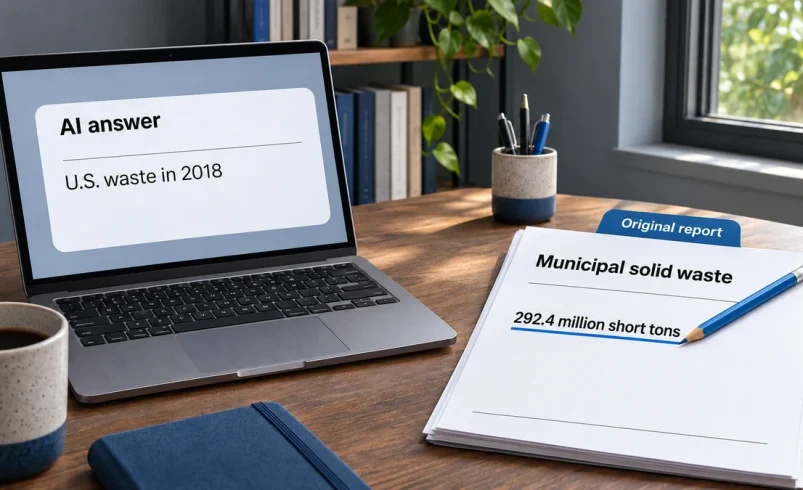
Here’s how to fact-check AI answers before you use them. Pick the claim that matters most, open its citation, and compare the answer with the original source. Check what the source measured and when. If the evidence supports a narrower claim, rewrite the sentence to match.
Start with numbers, quotes, and anything you plan to publish. A citation is a lead until you’ve opened it and found the evidence. Our comparison of AI research tools with citations covers tool choice. This guide walks through what to do once you have an answer.
This guide uses official documentation and published research checked on November 8, 2026.
Verify AI-generated information in order of consequence. If a claim would change what you buy, publish, or tell a client, check it before spending time on background details. Put legal, medical, and financial claims at the top of the list when someone may act on them.
Next, mark details you can check directly. Numbers need units and a clear definition. Dates need an event attached to them. Names and quotes need the right person, spelling, wording, and context. Check a statistic destined for a chart even if it appears only once in the draft.
Look for words that do more work than they seem to. “Caused,” “always,” and “doubled” make stronger claims than “followed,” “in this sample,” and “increased.” Fact-checking AI responses often comes down to finding the extra word the source can’t support. For why those errors can sound convincing, see our guide to AI hallucinations. OpenAI’s 2025 research paper examines why models sometimes guess when uncertain.
Turn the answer into a short list of claims and trace each one to the evidence. The following hypothetical response uses a real report so you can open the source and see how each verdict was reached.
The United States generated about 292.4 million short tons of municipal solid waste in 2018. It recycled 32.1% of that waste, mainly because curbside recycling expanded. About a quarter went to landfills. Source cited in the example: EPA’s 2018 fact sheet.
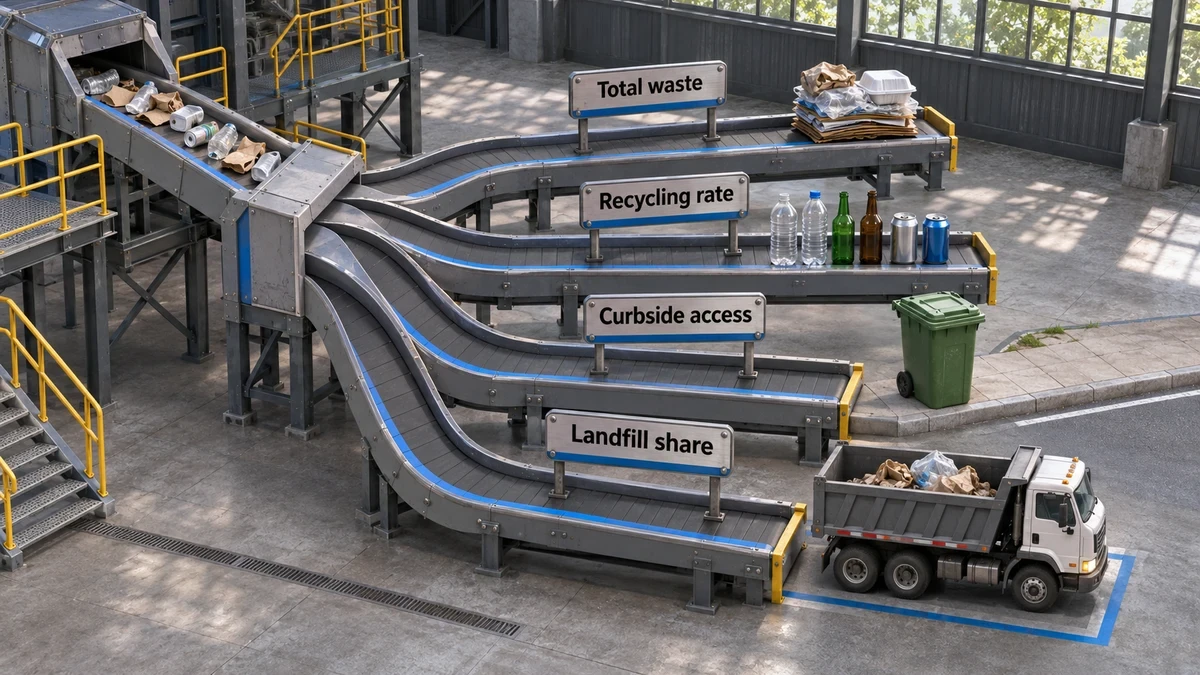
The paragraph makes four claims. It gives a total, a recycling rate, a reason for that rate, and a landfill share. Separate the rate from its proposed cause, because you could verify one and still have no evidence for the other.
For AI answer verification, copy the claim as written before you start checking it. That preserves the qualifiers you might otherwise lose. Here, “municipal” limits which waste counts, “2018” sets the period, and “mainly because” says one factor mattered more than the others.
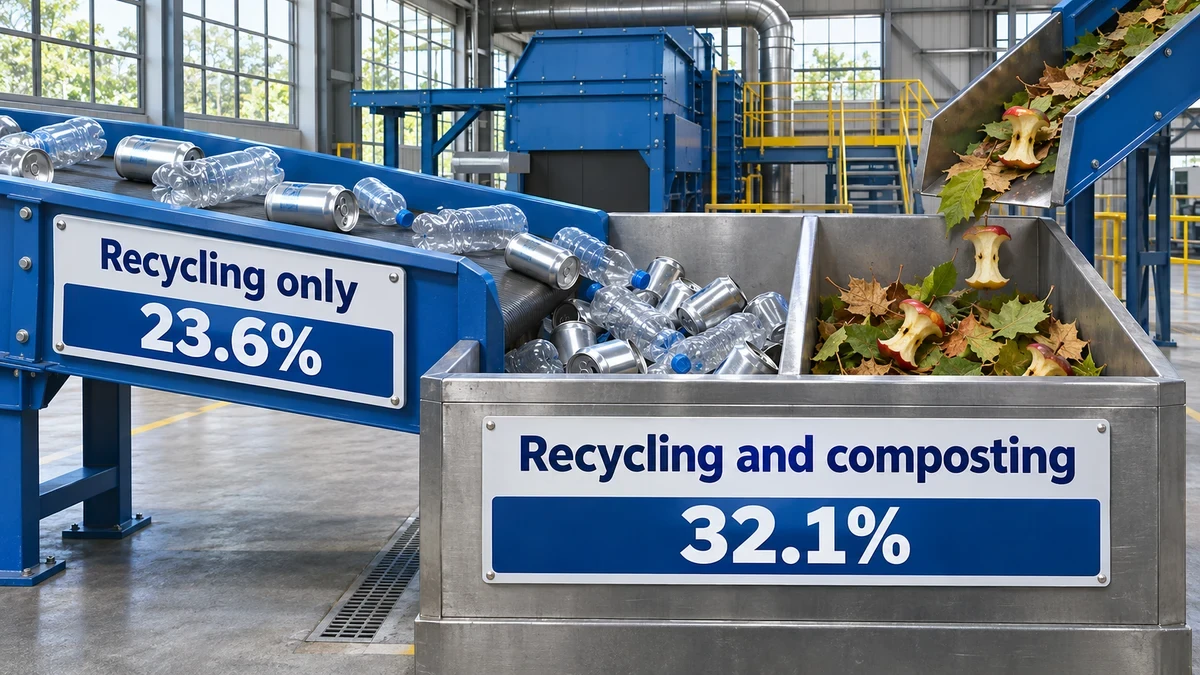
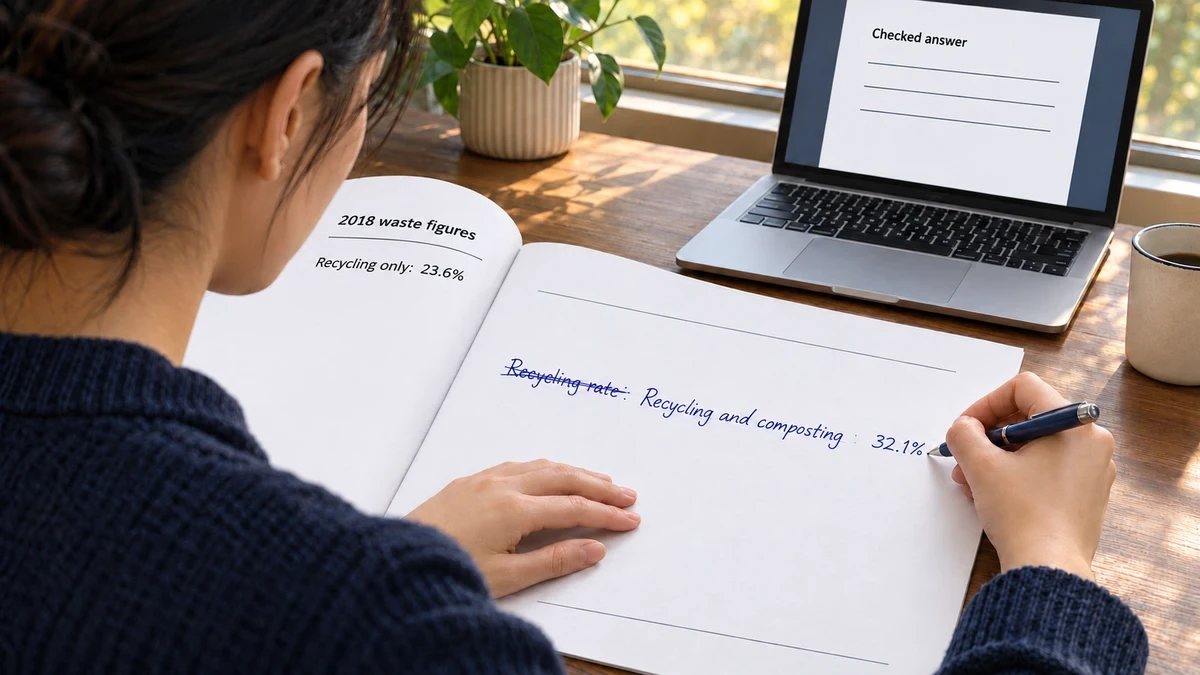
The cited link opens an EPA fact sheet with 2018 figures. Search the document for “32.1” and read the sentence around it. The EPA’s December 2020 fact sheet reports 32.1% for recycling and composting together and 23.6% for recycling alone. The answer copied a real number but dropped part of its definition. EPA fact sheet, figure 2 and accompanying text.
That difference is the heart of AI citation accuracy. A valid link can lead to the right document and still fail to support the wording. If a citation is missing or broken, search for the exact title and publisher. Then find the passage yourself. A matching title alone settles only whether the source exists.
A primary source provides firsthand evidence for the claim, such as the agency’s own data table or a study that reports its own measurements. A news article or later report can help you find it. Follow the link or footnote to see what the original measured. University of California, Santa Cruz library guide to primary and secondary sources.
Here, the fact sheet rounds the total to about 292 million tons. For the finer figure, open the EPA’s companion data tables. The 2018 generation total is 292,360 in a table expressed in thousands of U.S. short tons. Multiply by 1,000 and round to one decimal place in millions. The answer’s 292.4 million is supported. EPA 2018 tables and figures, table 35.
If you’re checking a paper, this is how to verify AI citations when you have only a title or an unfamiliar string of letters and numbers. Search by title and author, or look up the digital object identifier (DOI), a persistent ID for a publication. Compare the record’s title, authors, and year, then open the paper and read the relevant section. Crossref Metadata Search.
Check where a second source got its figures. The U.S. Government Accountability Office’s 2020 recycling report repeats the national waste total and credits the EPA in its first footnote. It helps you trace the number, but it draws from the same estimate. GAO recycling report, page 1.
Seattle Public Utilities’ 2018 recycling report is separate evidence about Seattle. Its own figures and discussion of possible causes cover a city, so they can’t establish why the national rate reached a particular level. To support the curbside claim, look for evidence that measures changes in access and isolates their effect at the scale the answer claims. Seattle Public Utilities’ solid waste reports.
Leaving a page to see who produced it and where its evidence comes from is called lateral reading. Mike Caulfield’s SIFT method also recommends finding better coverage and tracing claims back to their original context. Caulfield’s original SIFT guide.
The EPA fact sheet is dated December 2020, but its figures describe 2018. The report uses U.S. short tons, and the denominator for each percentage is total municipal solid waste generated. Table 1 reports that 50.0% was landfilled. That directly contradicts the answer’s “about a quarter.” EPA fact sheet, table 1.
Apply the same check to any primary source research. A survey about paying customers may exclude free users. A measurement from one country may cover a different population from a global figure. If the claim says “today,” check for a newer release and confirm its data period too.
Learning how to fact-check AI answers includes deciding what to do with incomplete evidence. Keep supported claims, narrow partly supported ones, and correct claims the source contradicts. When you find no adequate evidence for a claim, record where you looked and leave it out of the published answer.
|
Claim |
Cited Source |
What the Source Actually Says |
Verdict |
|
292.4 million short tons of U.S. municipal solid waste in 2018 |
EPA fact sheet |
The fact sheet gives about 292 million. The companion table gives 292.36 million. |
Supported |
|
32.1% was recycled |
EPA fact sheet |
32.1% includes composting. Recycling alone was 23.6%. |
Partly supported |
|
Expanded curbside access was the main reason |
EPA fact sheet |
The cited report gives national totals. The sources reviewed don’t establish the proposed cause. |
Not found |
|
About a quarter went to landfills |
EPA fact sheet |
Table 1 reports 50.0% landfilled. |
Wrong |
Copy those four column headings for your next check. Add a page or table number to the evidence cell so someone else can repeat the check without searching the whole report.
Checked version: The EPA estimated that the United States generated about 292.4 million short tons of municipal solid waste in 2018. About 32.1% was recycled or composted, including 23.6% recycled. Half went to landfills. EPA’s 2018 fact sheet.
Use the shortest check that covers the consequences of getting it wrong. A chatbot can help you list claims and suggest search terms. Keep the evidence log yourself so you can see which claims you’ve checked and which are still open. Our comparison of Perplexity and ChatGPT Search explains where source-linked search fits.
|
If You’re… |
Start With… |
Finish When… |
|
Getting oriented on an unfamiliar topic |
Open the source behind the main claim. |
You can explain what the source actually says. |
|
Publishing a report or article |
Track every consequential claim and link to its original evidence. |
A reader can reproduce the check from your links and locators. |
|
Making a high-stakes decision |
Find the authority for your situation and ask a qualified person to review it. |
The reviewer has checked that the evidence applies to your decision. |
If you’re building research into a recurring process, use the AI workflow guide to assign a reviewer and define what counts as an approved claim.
The quickest way to learn how to fact-check AI answers is to try the method on one paragraph from your next draft. Start with its most important claim. Save the source, the relevant passage, and your corrected wording before you move on. If your team produces recurring briefs, build that check into a source-linked research workflow.
Look for an author-posted version in a university repository or ask a library for access. Use an abstract only for claims it explicitly supports. If you need a subgroup result or a methods detail, hold the claim until you can read the relevant part.
Check the publisher’s update history or an archived copy to see what changed. Cite the version you used and make clear when an older version describes a past rule or figure.
A DOI identifies a record. It can point to a preprint, a dataset, or a journal article. Check the publication type and look for corrections or retractions on the publisher’s page before relying on the result. Crossref Metadata Search.





1 Comment
[…] Citation. Open the link and confirm the current Returns Policy supports the answer. A link to an outdated version or a general folder fails even if the wording sounds right. Use the same method you would to fact-check AI answers against original sources. […]