Perplexity AI Review: The AI Search Engine Challenging Google in 2026
April 17, 2026
0
This Perplexity AI review is based on three months of daily use and a 100-query structured test run against Google across categories ranging from medical research to local
This Perplexity AI review is based on three months of daily use and a 100-query structured test run against Google across categories ranging from medical research to local business recommendations. Perplexity has attracted a disproportionate amount of press coverage for a company its size, and the coverage tends to fall into two camps: breathless enthusiasm from AI-native users who’ve abandoned Google entirely, and dismissal from people who tested it briefly and found it lacking. Both reactions miss the more useful, nuanced picture.
Perplexity AI is genuinely good at certain things and genuinely bad at others. Figuring out which is which determines whether it’s worth paying $20 per month for Pro or whether it belongs in your workflow at all.
What Is Perplexity AI?
Perplexity AI launched in 2022 as an answer engine rather than a search engine. The distinction matters. Google shows you links and trusts you to read them; Perplexity reads the relevant sources for you and synthesizes an answer with citations. By 2026, it has expanded significantly,i.e, Pro Search, Spaces for collaborative research, and deeper AI model integration (including GPT-4o and Claude 3.5 Sonnet as underlying models for Pro users) have made it genuinely competitive for research-heavy workflows.
The platform is available at perplexity.ai with a free tier and a Pro subscription at $20/month. The free tier uses a lighter model; Pro unlocks deeper search capabilities, longer answers, image generation, and the ability to connect your own files. Unlike ChatGPT or Claude, Perplexity is search-native; every response includes source citations that let you verify the answer, rather than treating the AI output as a terminal point.
How It Works: AI Search with Citations
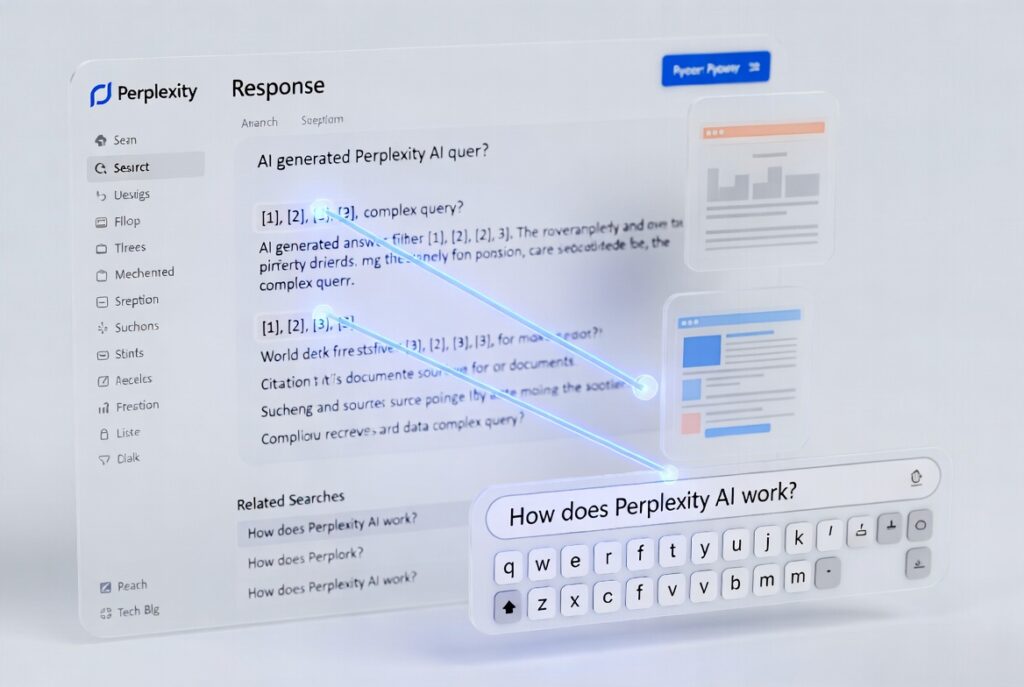
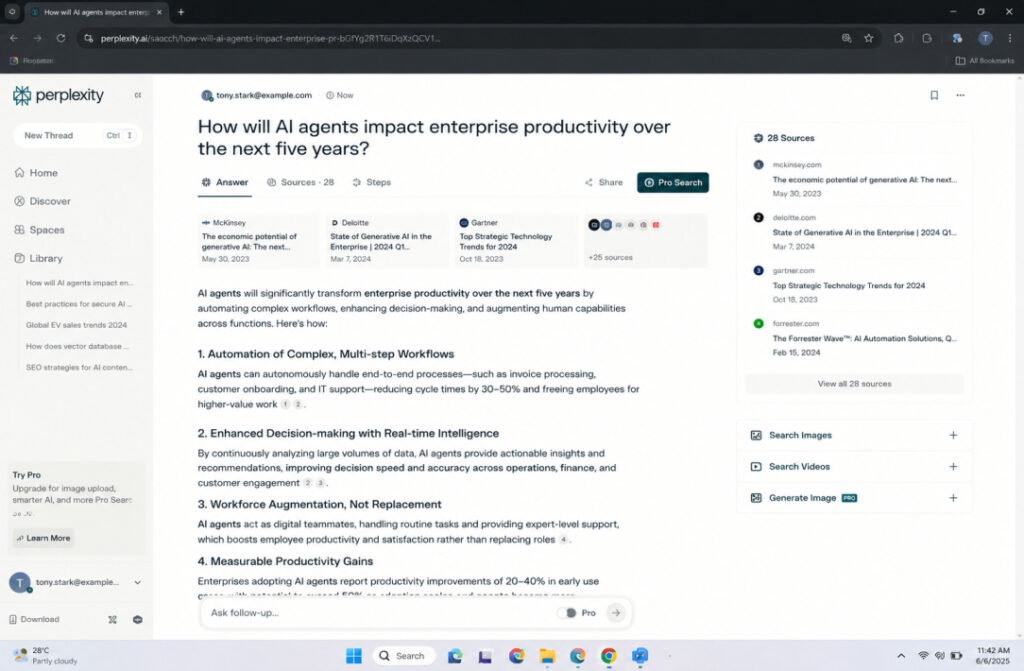
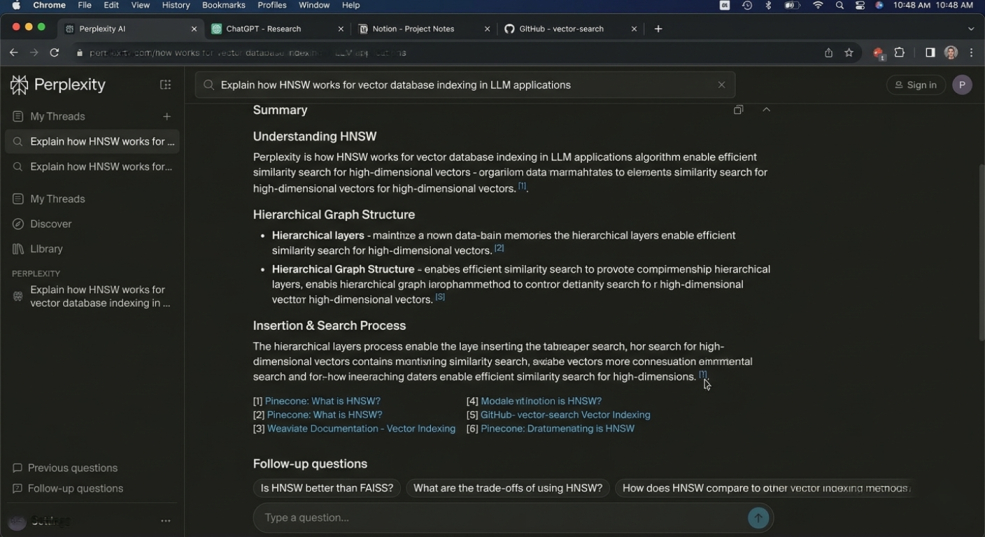
When you submit a query, Perplexity fetches and processes a set of relevant web pages in real time, then generates a synthesized answer using those pages as grounding. Every claim in the response is tagged with a numbered citation that links directly to the source page. You can click through any citation to read the original, a feature that fundamentally changes the trust dynamic compared to standard AI chat tools, where the source is invisible.
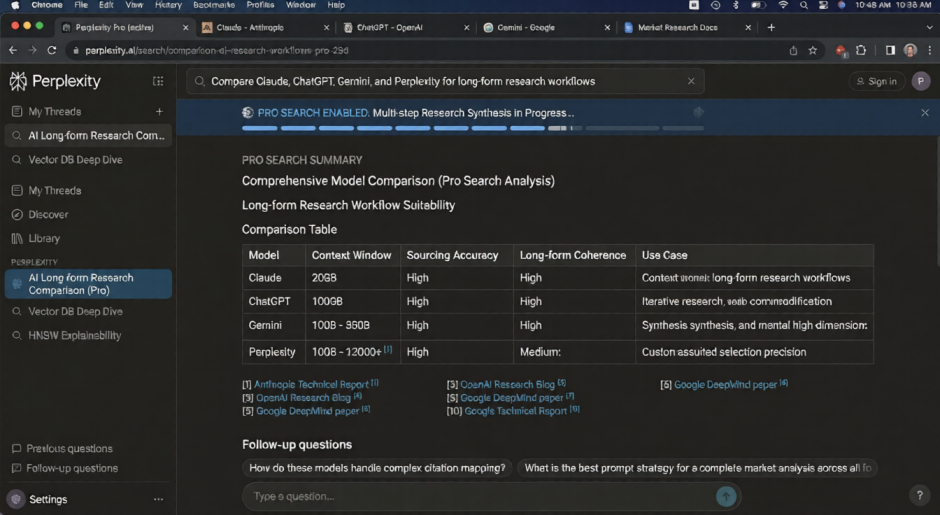
Pro Search goes further by running multiple search iterations within a single query, essentially doing several rounds of research and synthesizing across all of them. For complex research questions that require triangulating information from multiple domains, Pro Search consistently outperforms the free tier in both depth and accuracy.
Feature Breakdown
Answer Engine
The core answer engine handles factual queries, technical how-tos, and research questions well. Response quality depends heavily on source quality for topics with authoritative web coverage; answers are accurate and well-sourced. For niche topics, recent events, or locally specific questions, the underlying source pool is sometimes thin, which shows up in the answers.
Pro Search
Pro Search is the most significant paid feature. In testing, it materially improved answer quality for multi-step research questions, the kind where you’d normally need to run five or six separate Google searches, open a dozen tabs, and synthesize manually. Pro Search does that synthesis work automatically and produces a more complete answer in one step. For researchers, analysts, and knowledge workers, the time savings are real.
Spaces and Collections
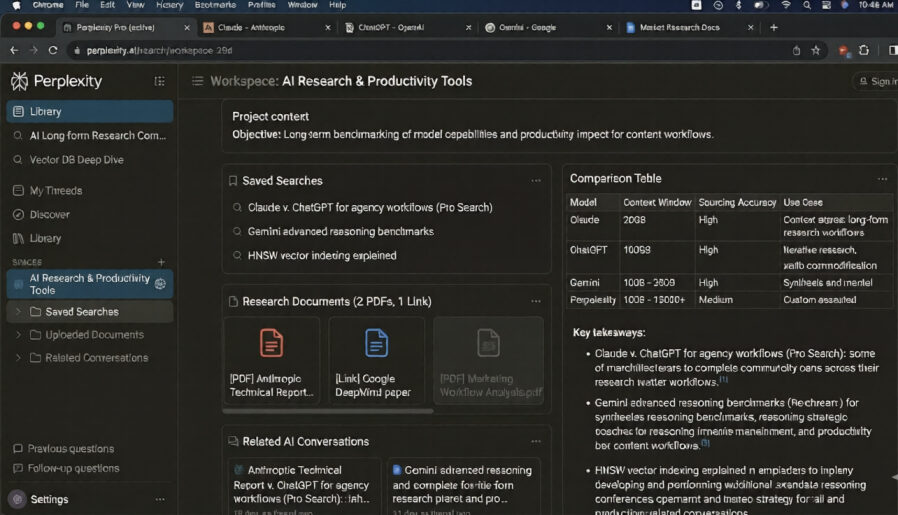
Spaces let you create persistent research environments, essentially a folder where you can save queries, uploads, and related searches, and ask follow-up questions against the accumulated context. For ongoing research projects, this feature has no direct equivalent in Google Search. It’s closer to a lightweight Notion AI workspace than a search upgrade.
Copilot Mode
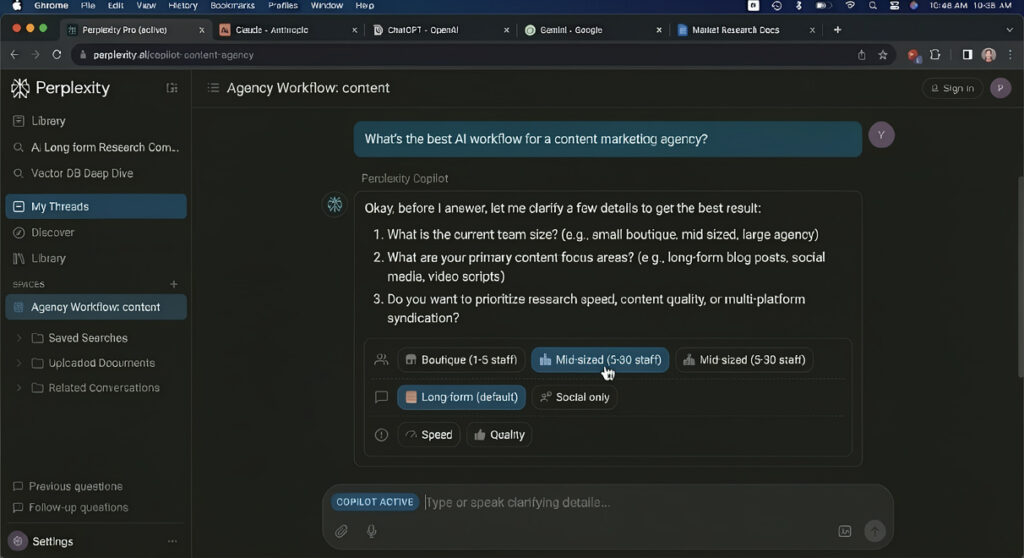
Copilot is Perplexity’s interactive research mode, where the AI asks clarifying questions before answering complex queries. For ambiguous research questions, it produces more targeted results than a single-shot query. For users who know exactly what they’re looking for, it adds friction without value.
100-Query Test: Perplexity vs Google
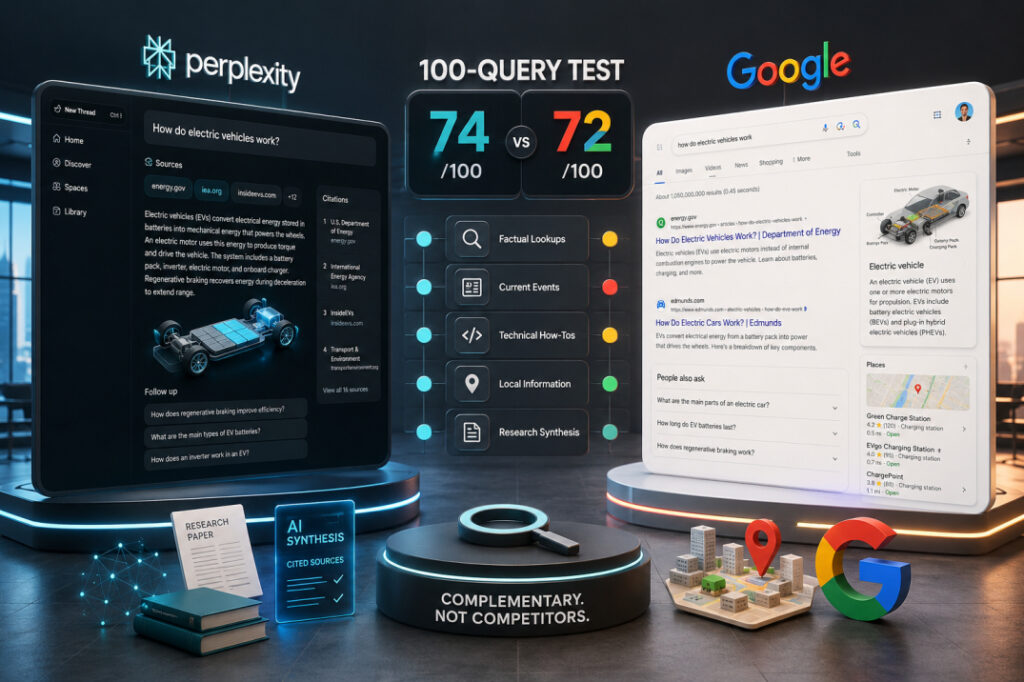
We ran 100 queries across five categories, i.e, factual lookups (20), current events (20), technical how-tos (20), local information (20), and research synthesis (20). Each response was scored on accuracy, source quality, and time-to-useful-answer.
Factual lookups (Perplexity 14/20, Google 16/20): Google’s Knowledge Graph handles simple factual queries faster. Perplexity wins when the question requires nuance or recent updates.
Current events (Perplexity 16/20, Google 14/20): Perplexity’s cited synthesis outperforms Google’s news carousel for understanding developing stories. The ability to ask follow-up questions about an event in context is a genuine advantage.
Technical how-tos (Perplexity 17/20, Google 13/20): This is Perplexity’s clearest win. Technical step-by-step answers with cited documentation are significantly more useful than Google results that require opening Stack Overflow threads and scanning for the relevant answer.
Local information (Perplexity 8/20, Google 18/20): Google wins decisively here. Local business hours, phone numbers, current prices, and Maps integration are categories where Perplexity has no competitive ground.
Research synthesis (Perplexity 19/20, Google 11/20): The category where Perplexity is most clearly superior. Multi-source synthesis of research papers, policy documents, and expert commentary is genuinely difficult to replicate with standard Google searches.
Overall score: Perplexity 74/100, Google 72/100. The headline number is close, but the category breakdown is more revealing than the total. These are complementary tools, not true substitutes.
Perplexity vs ChatGPT for Research
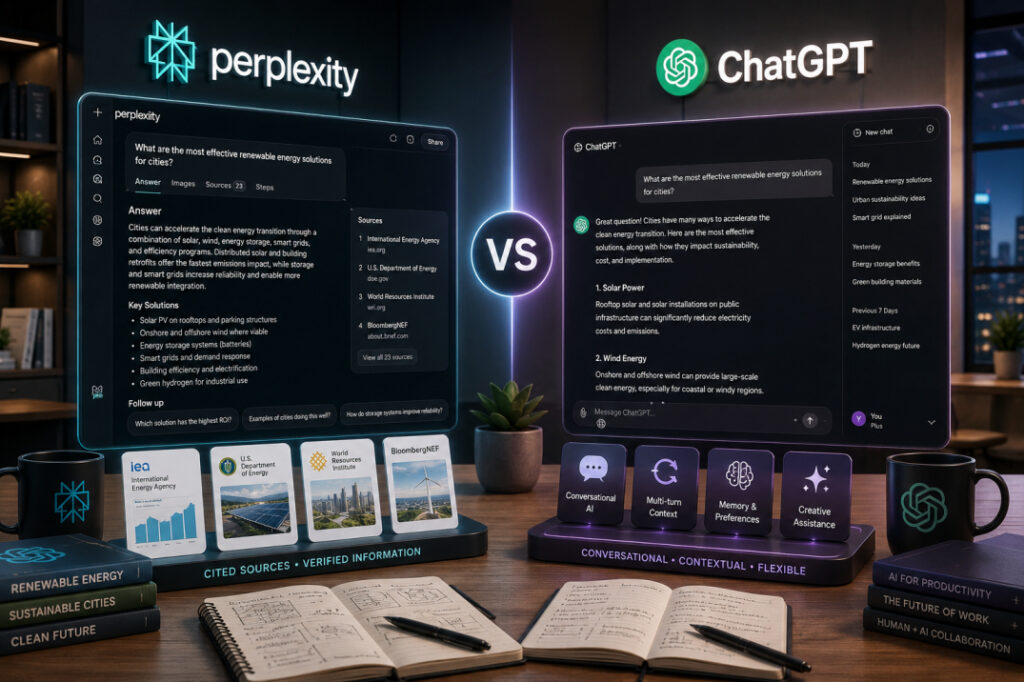
The more useful comparison for many users is Perplexity vs ChatGPT. Since both are AI-native tools often considered for similar workflows. ChatGPT (with browsing enabled) and Perplexity can both answer research questions with web grounding, but they handle it differently.
ChatGPT generates more natural, conversational responses and handles multi-turn conversations with better context retention. Perplexity gives you citations by default on every response, making verification faster and trust higher for research-critical use cases. ChatGPT’s memory and custom instructions add flexibility that Perplexity’s Spaces don’t fully replicate.
Our guide to the best AI productivity tools and the Notion AI review cover tools that integrate well with Perplexity for knowledge workers building fuller AI-enhanced workflows.
Is Perplexity Pro Worth $20/Month?
For heavy research users, analysts, journalists, academics, and consultants doing frequent literature reviews, yes. Pro Search saves meaningful time on multi-source research, and Spaces provide a research organization layer that Google cannot match. If you’re running five or more complex research queries per day, the efficiency gain justifies the cost.
For casual users who search for recipes, local business information, and current events, the free tier covers most needs. The $20/month price point isn’t justified by occasional use, regardless of how impressive Pro Search is when you need it.
The honest middle ground: try the free tier for two weeks and track which types of queries frustrate you by hitting limitations. If the limitations are in research synthesis or technical how-tos, upgrade. If the frustrations are about local search or real-time maps integration, Perplexity Pro won’t solve them regardless of tier.
Pros and Cons
Strengths: Citations on every response, excellent research synthesis, Pro Search is genuinely impressive for complex queries, growing Spaces ecosystem for organized research, cleaner interface than most AI tools.
Weaknesses: Local search is weak, real-time maps integration is absent, free tier model quality is noticeably lower than Pro, answer depth for niche topics depends on available sources, no memory or personalization features.
Frequently Asked Questions
Is Perplexity AI better than Google?
For research synthesis and technical how-tos, yes. For local search, current maps data, and simple factual lookups, no. Most power users benefit from using both, not choosing one.
Does Perplexity AI hallucinate?
Less than pure language models because every answer is grounded in cited sources. But inaccuracies still occur when sources are poor quality or when the synthesis incorrectly interprets source content. Always verify important claims via the citations.
Is the free tier useful?
Yes, meaningfully. The core answer engine with citations is available for free. Pro Search and Spaces are the main features locked behind the subscription.
Can I use Perplexity for academic research?
As a discovery and synthesis tool, yes. It’s excellent for getting oriented in a new domain quickly. For final citation purposes, verify everything through primary sources. Perplexity cites web pages, not academic databases, and web coverage of academic literature is uneven.
Final Verdict
Perplexity AI is the right tool for knowledge workers who spend significant time doing research across multiple sources. The citation model alone makes it more trustworthy than citation-free AI tools for research-critical tasks. And Pro Search is one of the most genuinely useful AI features available at this price point. The excitement around Perplexity is justified for research-heavy users, and overstated for everyone else.
For further context on how Perplexity fits into broader AI search trends, MIT Technology Review’s coverage of the AI search wars provides useful context. And Google’s own documentation on its AI Overviews feature is worth reading to understand how traditional search is adapting to competitive pressure from tools like Perplexity.